Diesel Bookstore — UX/UI Redesign
Project Type: Group UX/UI Project
Role: User interview synthesis, UX scenarios, and experience mapping
Tools: Figma • Card Sorting • UX Research • Wireframing • Prototyping • Accessibility Principles
Project Overview
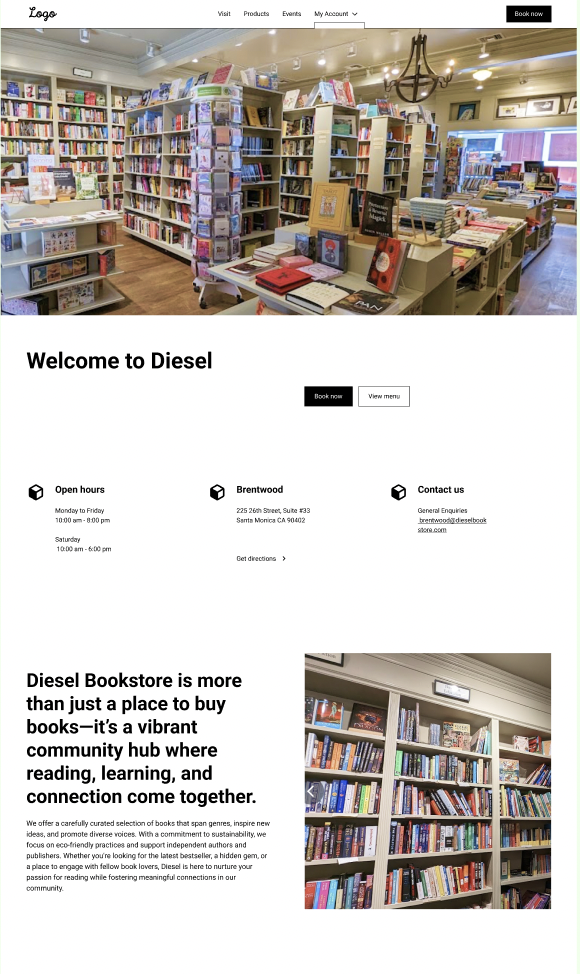
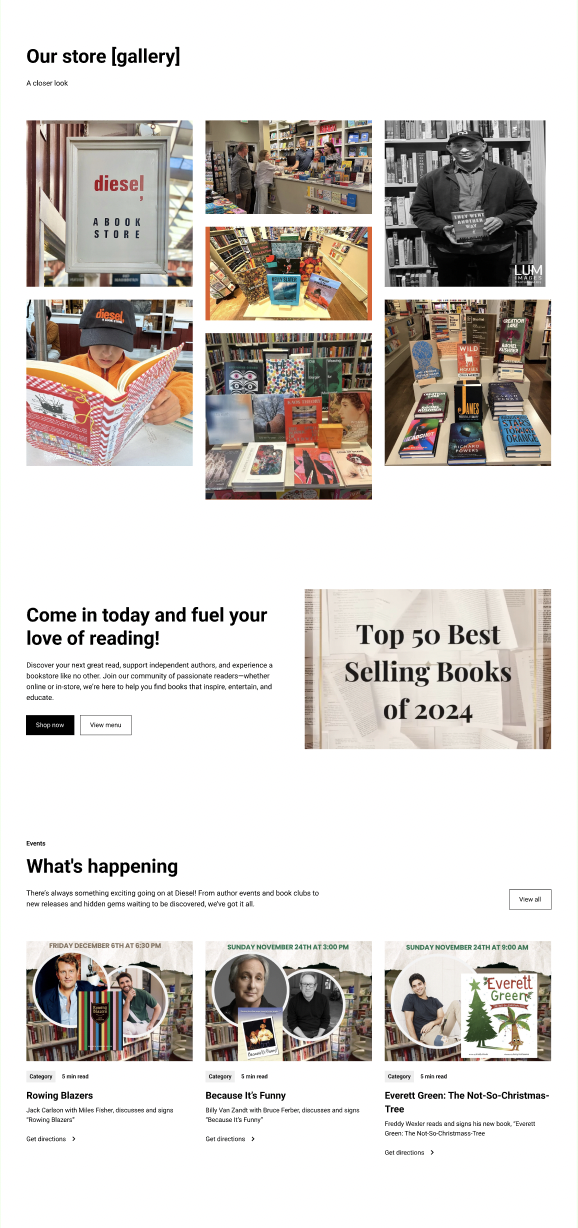
Diesel Bookstore’s website redesign was created to translate its strong in-store community and curated literary experience into a clearer, more intuitive, and accessible digital interface. The redesign prioritizes structure, usability, and trust to improve the online book discovery journey.
The Problem
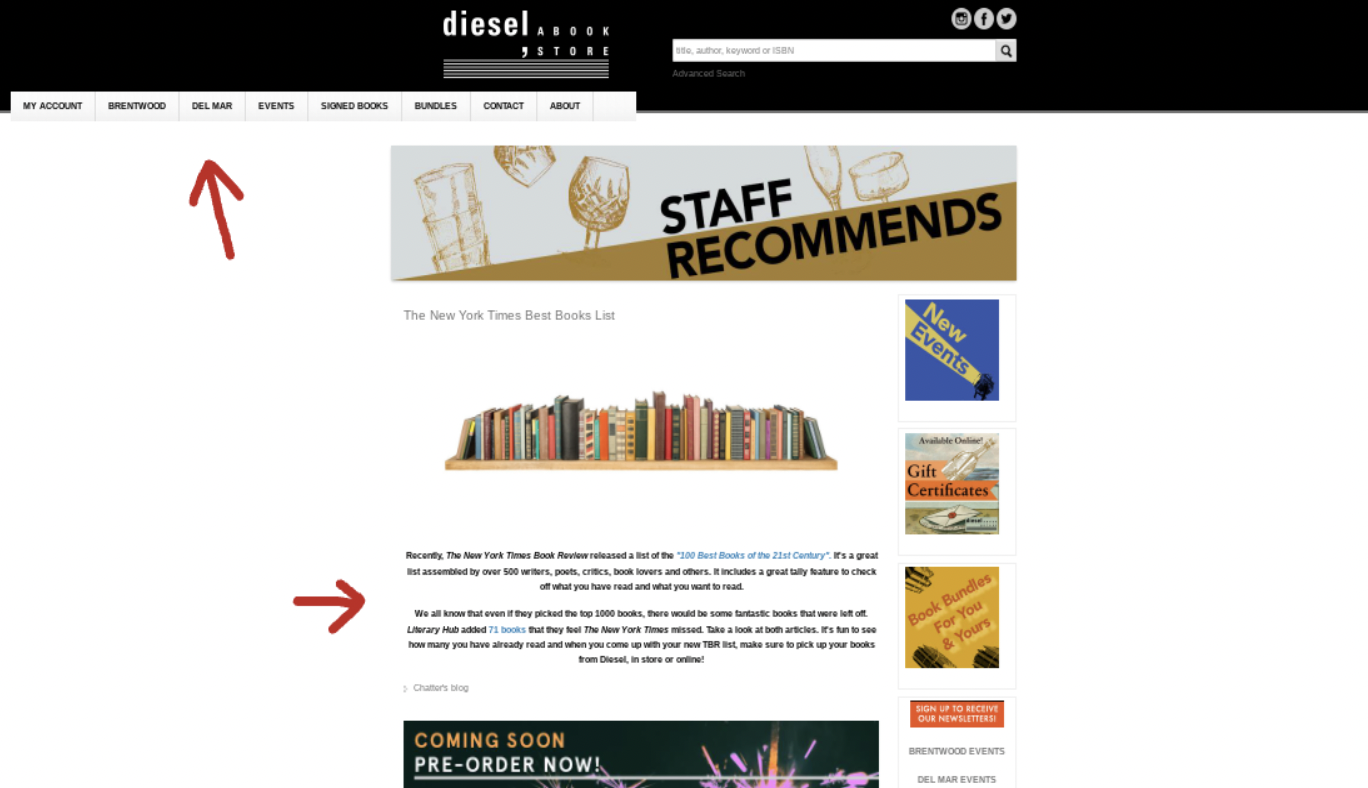
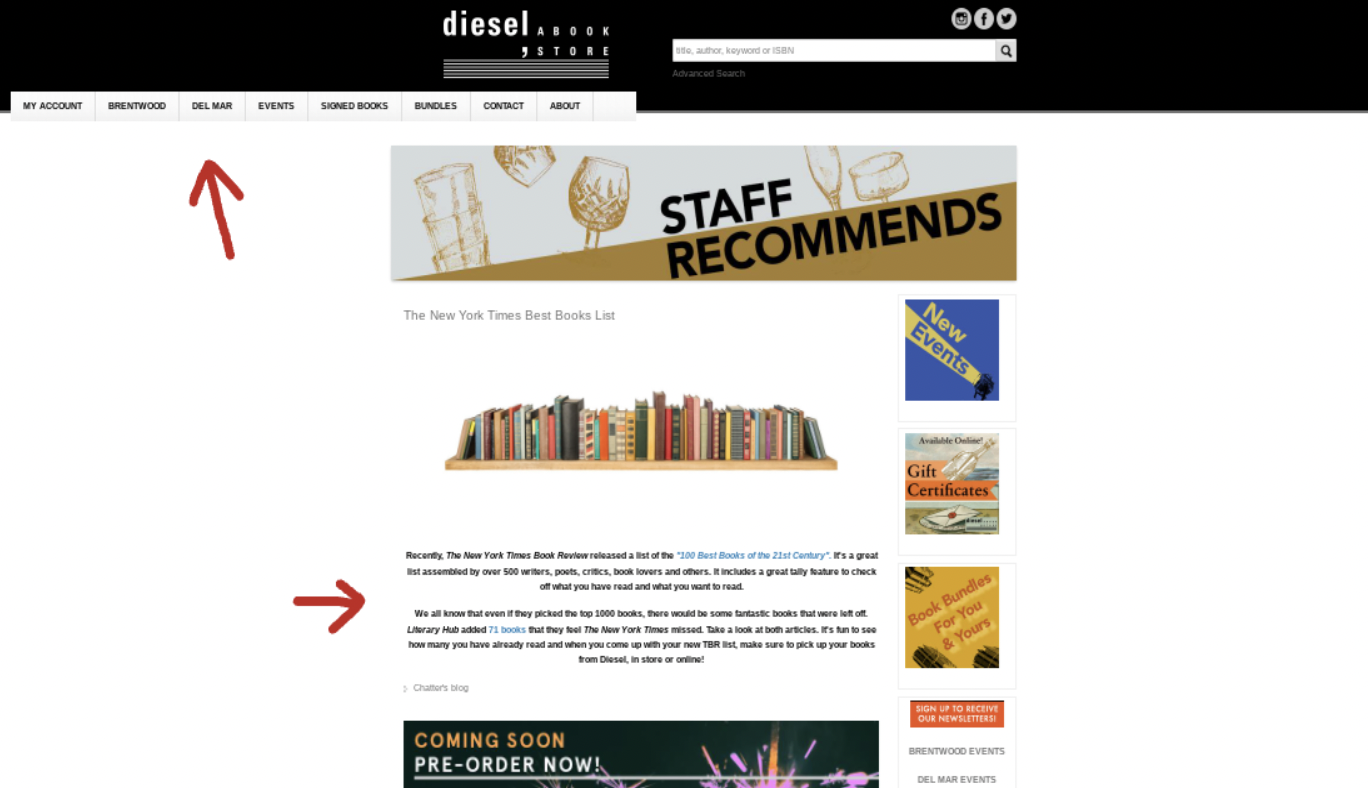
The original website presented key usability challenges:
• Visually cluttered layouts
• Inconsistent heading and content hierarchy
• Confusing and duplicated navigation patterns
• Poorly organized book categories
• Low-visibility search functionality
• Limited accessibility support for visually impaired users
These issues increased cognitive effort, slowed discovery, and weakened digital trust.
Research Focus
User Interview Summary
I conducted and synthesized user interviews to identify digital friction points and align the redesign strategy with real user expectations. Key findings revealed that users perceived the website as visually outdated, difficult to navigate, poorly categorized, and insufficiently accessible—creating barriers to seamless book discovery and reduced trust.
Card Sorts
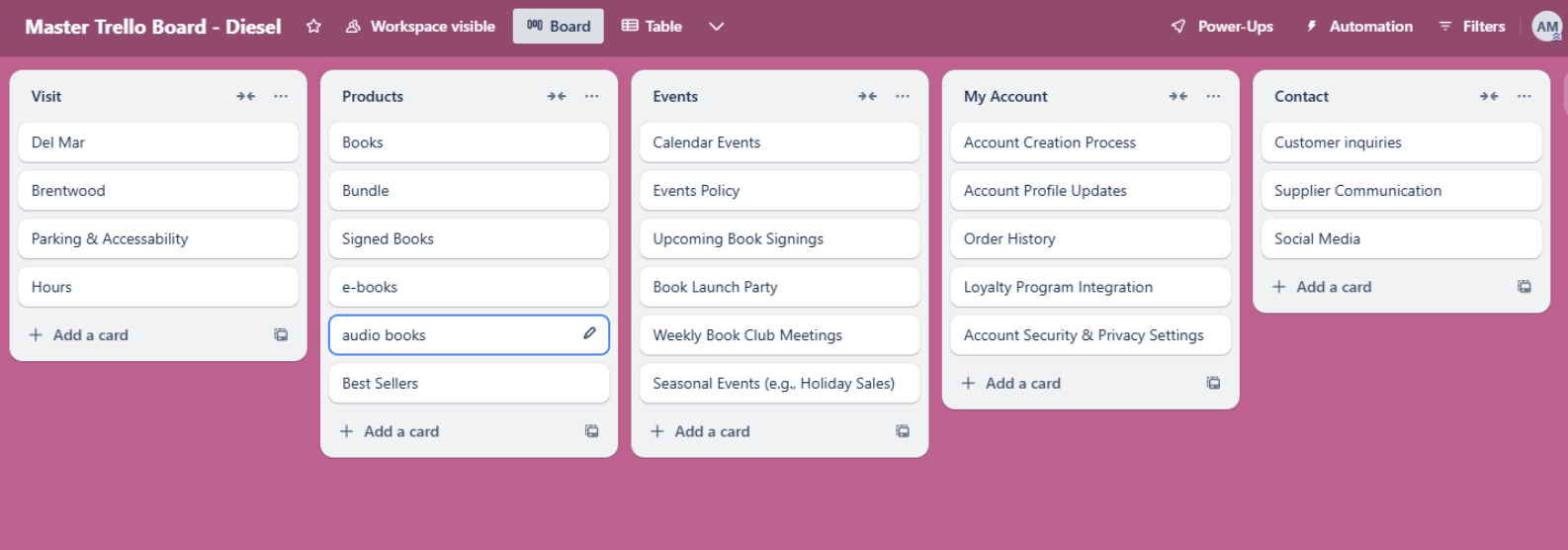
Helpful initial brainstorming and visualization tool. Was useful for seeing how specific branch locations could be consolidated under “Visit” instead of having separate tabs on the navigation bar.
Bundles and other digital and physical book products were grouped under products as opposed to having individual tabs on the navigation bar.
For the most part, the team felt that sorting was more intuitive when we cleaned up the navigation bar.
Design Solution
The redesign concept introduced:
• A navigation bar with clearer priorities
• Stronger typographic and layout hierarchy
• More visible, functional search placement
• More logical genre categorization
• Improved accessibility and readability patterns
Before
After